
Managing the Political Message in a Cost-of-Living Crisis
By Mike Medeiros
Earlier this month, the American midterm elections delivered a historic defeat for the governing Republican Party. Democrats won control of both chambers of Congress, flipping seats in states and districts that had long been considered Republican strongholds. The result was a significant rebuke of Donald Trump and his administration.
There are several explanations for such an electoral drubbing, but one stands out: the cost of living.
Across much of the world, citizens are struggling with the rising cost of everyday essentials. Housing, groceries, transportation, and other necessities have become increasingly expensive, while household incomes have struggled to keep pace. For many, the economic recovery celebrated by governments and financial markets has yet to translate into an improvement in their everyday lives.
This presents a particularly difficult challenge for incumbent governments. They are in charge and are therefore held responsible for the economic conditions facing their citizens. Even when external circumstances are largely beyond their control, voters are not necessarily interested in hearing excuses. They are upset at their lives becoming more difficult.
Recent elections illustrate this challenge. Viktor Orbán’s government in Hungary suffered a crushing defeat in April 2026 after 16 years in power, amid dissatisfaction with inflation, living standards, and public services. In Serbia, economic grievances formed part of broader public frustration with corruption and government accountability. New Zealand’s governing coalition also faced significant electoral pressure, with affordability remaining an important concern.
The lesson is familiar: it is difficult for incumbents to campaign against an elephant in the room. But we should be more precise about what that elephant actually represents.
It’s the Economy, but Whose Economy?
There is a famous saying in American politics, popularized during Bill Clinton’s 1992 presidential campaign: “It’s the economy, stupid!”
The expression captures an important reality of electoral politics. Economic conditions matter, often enormously. However, it can be misleading to interpret the economy exclusively through macroeconomic indicators.
GDP growth, stock market performance, and unemployment figures provide valuable information about a country’s economic health. But they do not necessarily tell us how citizens feel about their personal financial situation.
A country can experience economic growth while households struggle to pay their bills. The stock market can reach record highs while younger generations find homeownership increasingly unattainable. Inflation can fall while grocery prices remain substantially higher than they were a few years earlier.
Voters do not necessarily evaluate the economy by looking at quarterly GDP figures. They evaluate it through their own experiences: the grocery bill, the rent payment, the mortgage renewal, and the money left at the end of the month.
In other words, economic voting is not simply about economic performance. It is also about perceptions of economic performance. Positive economic statistics are unlikely to resonate with people whose everyday financial experiences tell them that they are worse off.
Three Ways to Survive a Cost-of-Living Crisis
If economic dissatisfaction is such a powerful electoral force, how do some incumbents manage to overcome it? Three examples offer interesting lessons.
- Turkey 2023: The Opposition’s Credibility Problem
In 2023, Recep Tayyip Erdoğan secured another presidential term despite a severe economic crisis, exceptionally high inflation, and declining purchasing power.
The economic conditions should have been extremely unfavourable for an incumbent. Yet Erdoğan defeated opposition candidate Kemal Kılıçdaroğlu.
One important factor was the opposition’s difficulty convincing voters that it could manage the economy more effectively. Many voters remained unconvinced that the opposition offered a better alternative. Economic dissatisfaction does not automatically translate into support for an alternative. Voters must also believe that the alternative can deliver something better.
This is an important lesson: criticizing an incumbent’s economic record is not enough. Opposition parties must establish their own economic credibility and convince voters that they have the competence to deliver on their promises.
- Brazil 2026: Connecting Economic Security to Broader Concerns
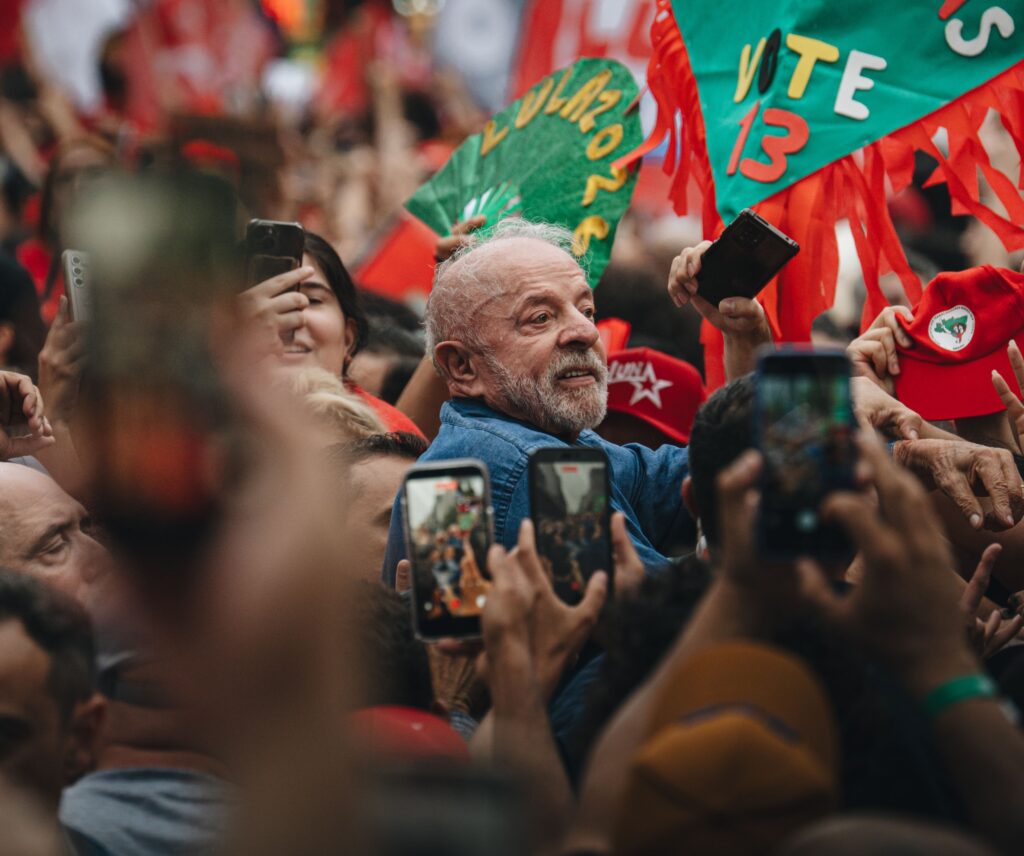
Brazil’s October 2026 presidential election offers another interesting example. Luiz Inácio Lula da Silva secured re-election by defeating Flávio Bolsonaro, son of former president Jair Bolsonaro, with 51.79% of the vote.
Lula’s victory came despite persistent concerns about affordability. Brazil’s economy had performed relatively well during his term, with unemployment falling, real incomes increasing, and poverty declining. Yet many households continued to feel financially squeezed. A September 2026 survey found that most Brazilians believed their incomes had either stagnated or failed to keep pace with the cost of living.
Lula’s campaign sought to connect economic security to a broader political narrative. Protecting social programmes and improving living standards remained important, but so did defending democratic institutions and Brazil’s sovereignty. Trump’s trade measures and political interventions also provided an opportunity to frame the election around national independence and resistance to foreign interference.
The campaign also benefited from considerable mobilization, both online and in the streets, particularly during the runoff. Lula ultimately brought together voters motivated by different concerns, from economic security to opposition to the Bolsonaro political movement.
His re-election illustrates a key point: even when economic dissatisfaction persists, incumbents can broaden the political debate by connecting material concerns to wider questions of identity, democracy, and national sovereignty.
- Canada 2025: Changing the Political Conversation
Canada’s 2025 federal election provides another interesting example, particularly for Canadian communicators.
For much of the preceding period, the governing Liberal Party appeared headed towards a historic defeat. Affordability, housing costs, and dissatisfaction with the government’s economic record had created favourable conditions for the Conservatives.
Then, Donald Trump began threatening Canada with tariffs and repeatedly questioning the country’s sovereignty.
The political conversation changed dramatically. The election was no longer exclusively about affordability or the Trudeau government’s economic record. It increasingly became about Canada’s relationship with the United States, economic sovereignty, and the country’s ability to stand up to an increasingly aggressive American administration.
Mark Carney’s arrival as Liberal leader reinforced this shift. A former governor of both the Bank of Canada and the Bank of England, he brought an economic background particularly relevant to the emerging debate.
The Liberals ultimately won the election. Carney’s economic credentials helped position him as the candidate best equipped to confront Trump’s threats, manage economic uncertainty, and improve Canadians’ financial circumstances.
Lessons for Communications Professionals
These examples offer several lessons that extend beyond electoral politics.
- Understand the difference between economic indicators and lived experience.
Communicators should not assume that positive statistics automatically generate positive perceptions. If people are struggling financially, telling them that the economy is doing well can actually undermine credibility. Effective communication begins by acknowledging people’s experiences.
- Offering an alternative matters as much as criticizing the incumbent.
Erdoğan’s victory illustrates that economic dissatisfaction does not automatically translate into electoral support for the opposition. Voters must also be convinced that the alternatives can manage the economy more effectively. For communicators, the lesson is that identifying a problem is only half the battle; you must also convince your audience that you have a credible solution.
- Understand your audience.
Lula’s campaign demonstrated the importance of recognizing how economic insecurity affects different segments of the population. A message about protecting social programmes can resonate particularly strongly with households that depend on them. One-size-fits-all messaging rarely works.
- Context can change the conversation, but leadership gives it credibility.
Canada’s 2025 election shows how an external event can fundamentally reshape the political environment. Trump’s threats created an opportunity for the Liberals to reposition the election around sovereignty and economic security. However, the shift was also facilitated by having a new leader whose experience and qualifications aligned with the challenges facing the country. Carney’s economic background helped make the Liberal message more convincing. Changing the conversation is important but having a credible and qualified leader capable of delivering on the new narrative is equally essential.
The cost-of-living crisis illustrates the challenges of crisis management. It is tangible, personal, and constantly reinforced through people’s everyday experiences. It cannot simply be managed through statistics, slogans, or carefully crafted talking points. Nor can communicators expect to make the problem disappear by shifting public attention elsewhere.
As the examples illustrate, changing the conversation can buy political breathing room, but it does not resolve the underlying crisis. Effective crisis management requires acknowledging people’s concerns, understanding how they experience the problem, and demonstrating that those in charge have both the competence and the willingness to address it.
Ultimately, effective communication can help build confidence in the proposed solutions to a crisis. But when a crisis affects people’s everyday lives, they need more than reassuring messages. They need credible leaders who offer a clear path forward and give them reason to believe that things can improve.
Mike Medeiros is a political scientist and communications specialist with expertise in political psychology, public communication, and audience behaviour. He holds a PhD in Political Science and recently completed the Strategic Public Relations program at the University of Toronto.