PR

New mandate speaks to our collective corporate social responsibility

150 150 Admin

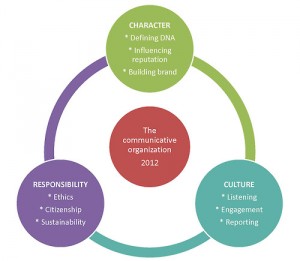
The three pillars of the Melbourne Mandate.

The world of PR will soon have a new mandate to shape the organizational role and responsibilities of public relations professionals. 

As part of the advance preparations, three working groups have been hard at work studying the issues and preparing the draft mandate for presentation and debate at World PR Forum 2012 in Melbourne, Australia.

  1. Organizational character
  2. Listening
  3. Responsibility

The new Melbourne Mandate picks up after the 2010 Stockholm Accords and is expected to be released later this month.

Watch this space for news that the final document is available and be among the first to share this guide to best practice with colleagues.

How will you stand out from other PR job candidates?

150 150 Admin

Looking for answers about Toronto’s job market and want to better understand what local employers are looking read more

Networking tips: Get more out of our events

150 150 Admin

Here are three tips to help you get the most out of our season opener on Thursday, September 27:

Know your objective. Would you like to make new contacts in your practice area? Are you looking for business intelligence or leads? On the hunt for an internship or job?

Work the room. Stay in any one group long enough to meet its members and establish the subject in discussion. If the topic is not right up your alley, bow out politely and move along.

Exchange business cards. Offer your card when you find a fit. Or, if you do not have a business card, inquire about the option to take a card from your new contact. Remember to follow-up afterward, too!

Further reading: Networking mistakes you don’t know you’re making, Networking is to easy as shouting is to quiet.

Chance to win: Call for professional development topic suggestions

150 150 Admin

Attention CPRS Toronto members! We would much appreciate your feedback about topics of interest for professional development this year.

CPRS Toronto is offering members an exclusive chance to win one free pass to the next CPRS Toronto PD event for those who submit their suggestions to the following questions:

1. Which professional development topics are of most interest to you?
2. Do you have any recommendations for esteemed public relations/communications practitioners located in the Toronto-area to lead a PD event this fall?

Please submit your suggestions to Christina Stefanski, CPRS Toronto Professional Development Chair at christina_stefanski@sony.ca by July 31, 2012 to be entered for your chance to win one free pass to the next CPRS Toronto PD event in the fall.

Academics vs. Practitioners: Can Public Relations truly be in the public interest?

150 150 Admin

By Sana Ansari @sanaansariTo

The PRSA discussion around the definition of public relations has sparked debate well beyond the American borders. In Canada, the definition is unique in its mention of the “public interest,” and it was to this end that a panel of five prominent PR practitioners and academics came together on May 10 to debate the much talked about question: Can public relations truly be in the public interest?

The participants

The debate was moderated by one of the authors of the Canadian definition: Dr. Terry Flynn APR, FCPRS of McMaster University. Industry practitioners included Andrew Berthoff, APR, Senior VP at Environics Communications; and Diane Bégin, APR, Senior Consultant at Thornley Fallis. Among the academics present were Barry Waite, Professor and Program Coordinator, Corporate Communications & Public Relations at The Centre for Creative Communications, Centennial College; and Roger Clowater, Public Relations Professor at Seneca College.

Reclaiming PR

According to Diane Bégin, the definition of public relations needs to be reclaimed. As suggested by Barry Waite, people have been given a negative perception of PR because of political and celebrity scandals, perpetuating a “spin mentality,” and the stereotype that public relations involves just crisis communications or media relations. To change this requires extensive education not only for practitioners within the field but also the public so they can call out unethical practice through the adequate channels. The ecology of education in Toronto needs to develop as it has in other parts of Canada to create more awareness about what the PR industry really encompasses.

PR as a corporate tool

Dr. Terry Flynn posed the question: Is serving in the public interest an ethical obligation (for an organization) or is it because it makes good business sense? According to Roger Clowater, an organization that maintains transparency and an open dialogue would reduce the chances of a crisis arising, and therefore make good business sense. A responsible PR professional will always advise executive management to be socially responsible and transparent, especially about issues that are in the public interest. Andrew Berthoff quoted Mark Twain saying “When in doubt tell the truth.”

Effective public relations start with good employee relations

When all employees are on board with the organization’s goals and standards, they are more likely to provide customers with a level of service in line with the organization’s mission statement. It is the role of the communicator to organize how a message is to be communicated, and cite mutual interests between an organization and its various stakeholders – all while maintaining transparency and an open dialogue.

Social media as a double-edged sword

With the rise of social media it has become easier than ever for the PR professional to establish an ongoing dialogue and keep management informed about issues that are of interest to the public and the organization itself. However, with the emergence of two-way communications, it has become challenging for an organization to control its message.  If a good PR strategy is in place, the feedback from various platforms can be used by the organization to better serve its stakeholders and customers.

Conclusion: Licensing is key

The panel agreed that the role of public relations professionals as a collective is to maintain an ethical sensitivity in all their dealings, and strive to implement a code of ethics in order to best serve the public interest.  Dr. Flynn quoted Dr. Edward Bernays, who is also known as the father of public relations saying: “the only way this profession is going to serve the public interest is if it is a licensed profession.” Andrew Berthoff further suggested that “accreditation and licensing need to go hand in hand.” According to Diane Bégin the role of PR professionals is, “…to set the bar high and to become the role models.” Licensing the profession would help create more awareness about and adherence to ethics and standards in the public relations industry.

Stay tuned!

The debate has set the ball rolling for further discussions about Public Relations education, ethics and standards. Stay tuned for upcoming events from the CPRS Marketing, Communications and Education Committee!

Twitter: @CPRSToronto #EDtalks

Sana Ansari is a member of the CPRS Toronto Marketing, Communications and Education Committee and an Intern at Smitten Creative Boutique.

What’s the Secret to APEX PR’s ACE Success?

150 150 Admin

By Parm Chohan

Executing a successful public relations campaign can be quite challenging.  Summarizing months of planning, brainstorming and program results all into an Executive Summary – and then in to a concise binder’s worth of details for an award – can be just as difficult.

APEX PR managed to pull off both with their “UPS Peak Season 2011” campaign, winner of a Gold 2011 CPRS Toronto ACE Award for Best Use of Media Relations.

I had a chance to chat with Erik Bauer, Consultant at APEX, to learn about and experience the journey that APEX and UPS Canada embarked upon, delivering exceptional program results and an award-winning submission.

Can you tell me about your winning campaign? What was the objective and why was it so successful?

The holidays are a busy time, especially in the world of transportation and logistics. In the month leading up to Christmas, UPS sees a 60 per cent volume increase in its normal daily delivery volume. UPS knew that in order to maximize business efficiency and provide stellar customer service during this demanding period it would have to develop a communications strategy to inform customers about peak season forecasts, packing tips and pertinent shipping deadlines.

UPS approached APEX to develop a public relations campaign to educate Canadians about the many potential complications associated with holiday shipping and thus ensure that more packages were delivered in time for the holidays.  APEX implemented a strategy that targeted consumer and online media, with images and messages of how to properly package gifts. The intent was to cut through holiday media clutter by showing how to give, rather than what to give.  Tactics included creating and distributing a VNR that allowed UPS to overcome challenges associated with media interview facilitation; a driver ride-along opportunity in mid-sized markets, and national media relations.

The success of the campaign was tied directly to the resulting coverage, which represented a nearly 200 per cent rise in reach from the previous year.  Furthermore, UPS’ key messages were prevalent in all the coverage, which allowed the brand to ensure that its target audience was informed and educated about all of its peak season offerings.

How did winning an award contribute to the agency’s brand?

The public relations industry is tremendously competitive. Now, more than ever, it is crucial for businesses to receive recognition for their outstanding achievements in order to distinguish themselves from competitors.

At APEX we pride ourselves on developing innovative communications campaigns that are based on sound strategic planning. More than anything, winning the 2011 CPRS ACE Award validated our strategic thinking and the stellar results that we achieve for our clients. It also helped to differentiate our business offerings from those of our competitors while at the same time building our reputation in the industry.

Finally, the award validated the hard work and dedication of the team that developed and executed this campaign. Although we all strive to achieve the best results possible for our clients, the truth is that sometimes we need to be recognized for our hard work!  This award was particularly significant because the judging committee consisted of a group of diverse and experienced fellow communicators. Being recognized by a group of peers made the award that much more meaningful.

What inspired you to submit?

First, it is important to note that not every campaign is worthy of an award submission; the process is lengthy and costly and therefore needs to be looked at like any other business decision. Every year APEX strategically considers its most successful campaigns in an effort to determine which ones warrant an application. The 2011 UPS Peak Season Campaign was a particularly strong candidate for an award submission for a number of reasons. Most importantly, the results of the campaign exceeded all of its goals, most notably in the quality of the coverage, all of which was positive and included UPS’ key messages. The coverage secured represented a 200 per cent increase from the previous year.

What were the challenges associated with submitting an award?

Anyone who has worked in the industry knows that time is a scarce resource. It can be difficult to balance the necessary demands of priority client work and addressing our own agency’s promotional and marketing needs. Luckily, we have a team of dedicated practitioners who – year after year – ensure that deadlines are met and that the submissions reflect the quality of work that we produce.

What were you sure to include in your binder?

Our supporting material included coverage from all mediums: digital, social, broadcast, and print.  We were also sure to include MRP reports and other supporting metrics that allowed the judges to get a better understanding of how we met and exceeded our measurable objectives.  In addition, we included a number of key messaging and planning documents that demonstrated our strategy and how our approach led to the results our client expected.  Lastly, we included a number of additional assets that we leveraged throughout the campaign, including digital b-roll, images, news releases, and other media materials.

How did it feel to receive your award at the gala?

Receiving the award at the gala was extremely meaningful for all of the team members involved.  As mentioned earlier, there is nothing quite like being recognized for your success by a group of your peers.  Accepting the award in front of a room full of seasoned communicators meant a great deal to the team; all of whom had put months of hard work and effort into the campaign. Furthermore, it was also great to share the experience with our client, who was in attendance that evening as well.

What advice would you give to other entrants?

The most important part of any award submission is ensuring that you are offering a full and accurate glimpse into the success of a campaign. Sound strategic planning is the foundation of any successful communications campaign, so be sure to illustrate how you developed tactics that were informed by a strong strategy. Lastly, ensure that you include measurable objectives, coupled with results that can be quantifiably analyzed by the judging committee.  Most importantly, be proud of the work you do and seek out the recognition you deserve!

Archived presentation: Dr. Robert Bell receives 2012 CEO of Award Excellence (32:01)

150 150 Admin

Dr. Robert Bell, CEO of University Health Network @UHN_News received the 2012 CEO Award of Excellence on January 24, 2012 at the Fairmont Royal York Hotel. Press play beneath the slides to hear the audio.

The screen can be enlarged in the bottom right corner.


Four tips for aspiring PR practitioners

150 150 Admin

By Gloria Lopez – Gil

Student members participated in Passport to PR on November 15, 2011. The event is a half day tour that gives behind-the-scenes access to some of Toronto’s top PR practitioners. 

As a student, it becomes a big concern as to what exactly our soon to be career actually intakes. Having the opportunity to visit Citizen Optimum, Toronto Board of Trade, and National allowed a glimpse into the reality of PR life. Advice given from practitioners working in the industry, being able to distinguish ways in which future practitioners are able to be successful.

Tips to be successful:

Nina Kalos and Stephanie Nadalin from Citizen Optimum

1. Network
If there is one thing to note about working in the PR industry, is the sole fact to network with as many people as you can. Get to know the people working in public relations. Working in public relations is a field in which many candidates are striving to make it to the top. It is important to maintain relationships amongst practitioners whom you may meet.

Nina Kalos from Citizen Optimum suggests students to “find a mentor”. Take advantage of mentorship programs, like the one that CPRS offers. Mentors are able to provide full insight on their experiences that they have come across while working in the industry.

2. Keep it all
It is that simple –keep it all, all the work that you have done keep it. Why forget about a piece of work that you have spent your time on? Scott Brownrigg, from Toronto Board of Trade made the point clear that it is vital to keep what you have worked on.

Having a portfolio prepared of your previous work only shows future employers that you are committed to your career. With a portfolio of all your work you are able to always look back to reference something that you may have forgotten about. Also collect any comments or recognition letters that you may have received.

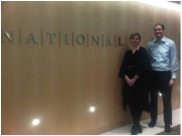
Elisabeth Mozel-Jury and Stephen Ledgley from National

3. Refine your writing skills
It is essential to have strong writing skills is in the PR industry. The English language seems simple, but it has its hidden complexities. Elisabeth Mozel-Jury and Stephen Ledgley, from National both had the same advice to students. Their advice that they have for students is to continuously work on writing.

Writing is a tool in which technology will never be able to replace. Constantly working on your writing will only prepare future practitioners for the reality of life. In careers, like PR, having to write a test as a requirement during an interview should come as no surprise. (Editor’s note: If you’re a member interested in writing for the CPRS Toronto New Perspectives blog, send us a note.)

Matthew Kofsky and Scott Brownrigg from Toronto Board of Trade

4. Choose your agency
The agencies are not out looking for you, as a PR practitioner it is your responsibility to choose the agency in which you feel is best suited for you. Stephanie Nadalin, from Citizen Optimum suggests students to “be choosey.” Ask questions when looking into PR agencies, as in what will your tasks be for a standard day.

Matthew Kofsky, from Toronto Board of Trade also advises students who are looking into internships to “make sure you enjoy it.” Make sure that the internship or the selected agency is the one fit for you. Research and educate yourself about the agency before stepping foot inside the front door.

So what are your tips for students studying public relations? Speaking on behalf of students, we’d love to hear from you. Fee free to post below.

October 2011 PD: Social Media Reality Check

150 150 Admin

By Cora Timofte @Cora_T

Members can view an archived webinar of this October 27, 2011 presentation (length 37:20) by David Scholz, Executive Vice President, Leger Marketing and Carolyn McGill, President and CEO, CNW Group in the members’ only blog.

Social media is the new normal, according to results from the Social Media Reality Check 2011, a unique study that looks at professional communicators’ use of social media in comparison to consumer opinions and the influence social media has on purchasing behaviour.

The study was first conducted in 2009 and reproduced twice in 2011. The results of all three sessions were contrasted and presented to an audience of communication practitioners, during the last CPRS professional development session, held on October 27, 2011.

A total of 590 communication professionals and over 1000 Canadian consumers were surveyed. According to Statistics Canada, 77 per cent of Canadians are online (connected to the Internet), with results of the survey indicating that 69 per cent of online Canadians use social media.

Social media tools and usage

The most popular social media websites among professionals and average consumers alike are Facebook and Twitter, followed by YouTube and Google Plus. Most people use social media at least once a day or more, but the reasons for use are different in professionals versus the general public.

Professional communicators use social media to find out news and information, share knowledge and ideas, keep updated with industry news and monitor talk about their organization.

A surprising finding indicates that only 40 per cent of practitioners use social media outlets to monitor their competitors or engage with journalists and bloggers. This is an area of downfall and in need of immediate update, according to David Scholz (@dave_scholz), VP at Leger Marketing – the company responsible for conducting the Social Media Reality Check 2011.

The majority of consumers use social media very differently compared to professionals, namely to keep in touch with friends and family, for entertainment purposes and to read about specific topics of interest.

Even though the study discovered a significant number of Canadians using social media to research information about various products and services, the majority of consumers don’t let this information affect their major purchasing decisions.

According to survey results, both communications professionals and consumers believe that social media can help shape opinions because people tend to generally trust information presented through social media channels more than information presented through advertising (46 per cent).

Social media in corporate communications

Carolyn McGill (@CarolynDavidson) President and CEO of the CNW Group, pointed out that with increased consumer demand for social media presence, senior management teams at most organizations are becoming increasingly supportive of online communication channels.

Most corporations still lack a proper budget for social media activities, but almost half of communications professionals surveyed expect an improvement in that area by next year.

The tools most commonly used by communications professionals, as reflected by survey results, include Twitter, blogs and multimedia elements.

More than half the number of Canadian organizations have at least one Twitter account, used to promote product launches and events, engage stakeholders and provide customer service assistance.

Blogs are becoming more influential and are recognized by communicators as an opportunity for opinion shaping, as a result of their seemingly unbiased structure.

Multimedia, as a communications tool, has seen increasing demand from consumers and the media, to increase visual interest, enable sharing and increase viewership.

Social media communication has increased from 2009 to 2011 in the professional and consumer sectors, with users discovering new ways to apply it.

Contrary to what most communicators believe, extensive social media exposure does not guarantee loyalty or a good reputation among stakeholders. Survey results show that consumers realize social media is just another communication vehicle and what they expect from organizations and professional communicators is more than just an online appearance.

Photos provided by CP Images

Archived webinar: Social Media Reality Check Findings (37:20)

150 150 Admin

Dave Scholz, Executive Vice President, Leger Marketing and Carolyn McGill, President and CEO, CNW Group presented on Canadian consumer and PR practitioner social media use on October 27, 2011. Data includes results from 2009 & 2011, with a consumer statistics updated as of October 27, 2011. Follow @Dave_Scholz & @CarolynDavidson

Press play beneath the slides to hear the audio. The screen can be enlarged in the bottom right corner. (Slides in PDF)

Related