
How Brands Can Harness Humor for April Fool’s Day PR Wins
By Lucy Luc
April Fool’s Day presents a unique opportunity for brands to engage audiences with humor, increase visibility, and leave a lasting impression. Playful campaigns and stunts can turn into memorable marketing wins, boosting social media engagement, media coverage, and brand affinity. However, successful humor in PR is about more than just jokes. It requires careful planning, alignment with brand values, and understanding the audience.
Why Humor Works in PR
Humor is one of the most effective ways to capture attention and build emotional connections. On April Fool’s Day, consumers expect lighthearted and playful content, making them more receptive to funny campaigns. Well-executed humor can humanize a brand, making it more approachable and relatable. It can also increase shareability, encouraging audiences to comment, like, and share posts, which helps expand organic reach. Humorous campaigns create memorable moments that stick in people’s minds, reinforcing brand recall long after April 1st.
Case Study Learnings from Successful Campaigns
Several brands have shown how humor can be used effectively in PR campaigns, and their examples provide lessons that any brand can learn from.
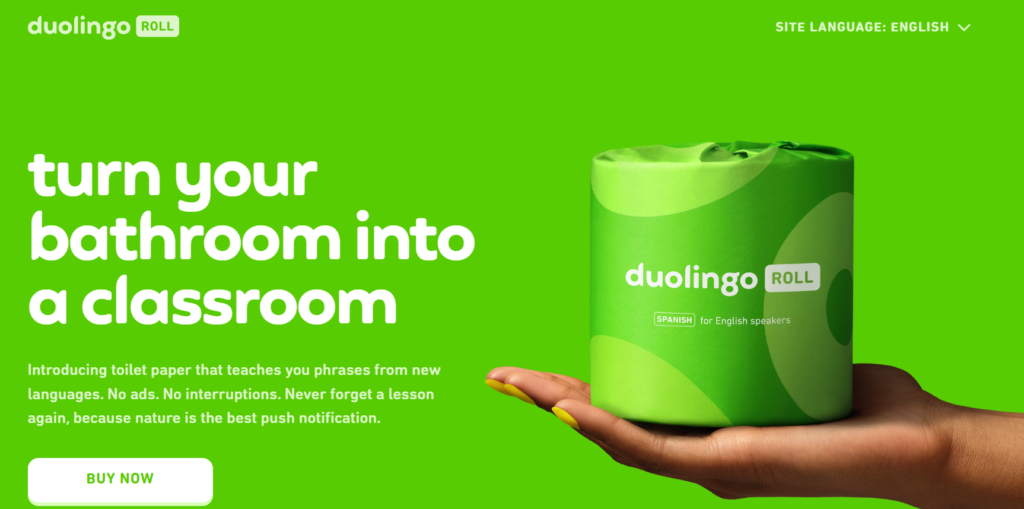
Duolingo has become famous for its playful and sometimes mischievous social media presence. For April Fool’s Day, the brand launched a toilet paper product with foreign language phrases called the Bathroom Classroom and introduced the “Duolingo Push” prank. These campaigns were successful because they were entertaining while still being relevant to the brand’s mission of teaching languages. The key lesson is that humor works best when it reflects the brand’s core message. Audiences find content more engaging and shareable when jokes feel authentic rather than forced.
Google Netherlands created the fictitious “Google Tulip,” a tool that supposedly allowed users to communicate with flowers. The campaign featured a realistic lab-style presentation that delighted audiences and went viral. This example teaches that attention to detail and clever presentation can make a humorous campaign feel real enough to be entertaining without misleading the audience. Visual storytelling and creativity can transform even an absurd idea into a memorable PR moment.
Burger King and Subway have also demonstrated the power of playful campaigns. Burger King introduced jokes like the Chocolate Whopper and the Impossible Whopper, while Subway created the Subdog prank. These stunts worked because they combined surprise with absurdity, creating buzz and encouraging social sharing. Sometimes the audience response was so enthusiastic that the ideas influenced real product launches. The takeaway here is that humor can inspire engagement and even innovation when it resonates with the audience.
A playful collaboration between Weetabix and Heinz Beans involved over 140 brands, sparking large-scale social media conversations. This example shows that humor can encourage collaboration and create community engagement beyond a single brand. Engaging multiple partners in a campaign can multiply visibility and generate a fun, collective energy that audiences enjoy interacting with.
Manforce Condoms and Clovia used fictional products to engage audiences and encourage social sharing, showing that humor works across industries. The lesson is that no matter the sector, playful content can break through the noise and attract attention, as long as it is relevant and entertaining.
Lessons for PR Strategy
From these examples, several broader lessons emerge for brands planning humor-driven campaigns. First, understanding the audience is critical. Humor should be tailored to cultural context, interests, and perceptions of the brand. Second, campaigns should align with brand personality to maintain trust and credibility. Third, keeping ideas fun and understandable ensures that audiences enjoy the joke without feeling misled. Multimedia elements like videos, interactive graphics, and mockups can increase engagement and shareability. Finally, brands should be ready to respond if a humorous campaign goes viral. Sometimes what starts as a joke can become a real product or opportunity, just as Subway’s Subdog inspired real customer interest.
It is also important to avoid pitfalls. Humor that touches on sensitive topics, is misleading, or is poorly timed can damage a brand’s reputation. Tesla’s joke about bankruptcy and Volkswagen’s early Volt-swagger campaign show how humor can backfire if not handled carefully. Strategic planning, timing, and clear messaging are essential to prevent confusion or negative perceptions.
April Fool’s Day campaigns highlight how humor can enhance PR by humanizing brands, creating memorable moments, and generating engagement. Successful campaigns combine creativity, brand alignment, and audience awareness. Lessons from Duolingo, Google Netherlands, Burger King, Subway, Weetabix, Heinz Beans, Manforce, and Clovia show that humor can be a versatile tool across industries and formats. Brands that plan thoughtfully, execute cleverly, and engage authentically can transform playful pranks into meaningful marketing wins.
Lucy Luc is the current president of the Student Steering Committee and a CPRS Toronto ACE Award–winning student in her final year of Humber Polytechnic’s Bachelor of Public Relations program, where she is completing her thesis.